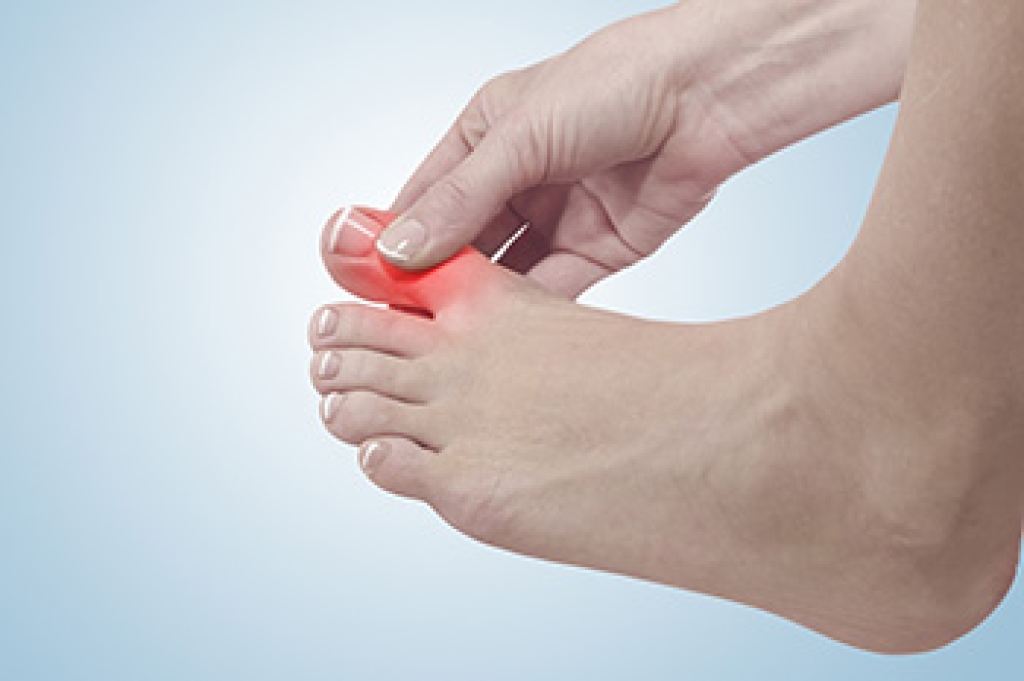
Gout is a form of inflammatory arthritis that often affects the big toe joint of the foot. It develops when uric acid builds up in the bloodstream and forms sharp crystals inside a joint. The pain usually begins suddenly, often during the night, and the joint may appear red, swollen, and extremely tender to touch. Even light pressure from a bedsheet can feel intense. Patients often describe the pain as burning or throbbing, and the skin around the joint may feel warm or tight. Common causes include high uric acid levels related to diet, dehydration, problems with kidney function, or genetics. A podiatrist can help diagnose gout through an examination, medical history, and sometimes blood tests or imaging. Treatment focuses on calming the inflammation and preventing future attacks. Care may include medication, supportive footwear, and guidance on lifestyle changes that reduce uric acid levels. Early treatment can protect the joint from long-term damage and reduce repeated flare-ups. If you think you may have gout, it is suggested that you make an appointment with a podiatrist.
Gout is a foot condition that requires certain treatment and care. If you are seeking treatment, contact one of our podiatrists from Ocotillo Foot and Ankle Centers. Our doctors will treat your foot and ankle needs.
What Is Gout?
Gout is a type of arthritis caused by a buildup of uric acid in the bloodstream. It often develops in the foot, especially the big toe area, although it can manifest in other parts of the body as well. Gout can make walking and standing very painful and is especially common in diabetics and the obese.
People typically get gout because of a poor diet. Genetic predisposition is also a factor. The children of parents who have had gout frequently have a chance of developing it themselves.
Gout can easily be identified by redness and inflammation of the big toe and the surrounding areas of the foot. Other symptoms include extreme fatigue, joint pain, and running high fevers. Sometimes corticosteroid drugs can be prescribed to treat gout, but the best way to combat this disease is to get more exercise and eat a better diet.
If you have any questions, please feel free to contact our offices located in Chandler, and Phoenix, AZ . We offer the newest diagnostic and treatment technologies for all your foot care needs.